

Faculty / Research

Craig C. Malbon, Ph.D., M.Div.
Leading Professor
Ph.D., Case Western Reserve University
Postdoctoral, Brown University, Division of Biology & Medicine
Visiting Scholar, Princeton Theological Seminary
M. Div. (Ethics), Union Theological Seminary in New York City
Fellow, Center for Medical Humanities, Compassionate Care, & Bioethics
Signal Transduction in Differentiation and Development: Roles of Molecular Scaffold Molecules (e.g., AKAPs and Dishevelleds)
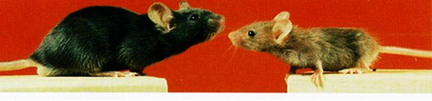
Transmembrane signaling involves two prominent pathways; one mediated by G-protein-coupled receptors (GPCR) and other by tyrosine kinases. GPCRs constitute a superfamily of ~3000 members in the human genome, including the well-known beta-adrenergic receptors as well as the Frizzleds, which are receptors for Wnt ligands that function in early development (see G-protein mutant mice below, control-left; Gai2-deficient from birth-right; animals are littermates). G proteins mediate aspects of development in human, flies, and zebrafish. Wnt signaling is a focus of intense research (see movie link). A central focus of the laboratory is to understand the mechanisms of signaling that direct early development, using mouse EC and human ES cells in culture.
Currently we are very interested in the spatial/temporal aspects of signaling and the roles of scaffold molecules capable of organizing complexes of protein kinases, phosphatases, adaptor molecules, and GPCRs in signaling. Dishevelled is a primary focus, as it orchestrates dynamic supermolecular assemblies of proteins (with Mr >5 MegaDa), termed “signalsomes”, propagating Wnt signaling.

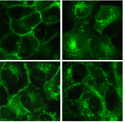
We also are interested in elucidating the biology, structure, and function of a prominent member of the A-Kinase Anchoring Proteins, AKAP12. This AKAP is a mobile scaffold that displays numerous docking partners (e.g., protein kinases, phosphatases, adaptor molecules, and other scaffolds) essential for cell signaling. The dynamic mobility of eGFP-tagged AKAP12 (0.45 MegaDa) is displayed the four-panel image below, in cells treated with beta-adrenergic agonist and observed over time (clockwise, from top, left-handed panel. We interrogate the spatial-temporal aspects of these scaffolds using “biosensors”, fluorescence correlation spectroscopy, supermolecular (>2 MegaDa) steric-exclusion chromatography, proteomics and mutagenesis, providing a powerful platform for novel research in this fundamental area of cell and molecular biology.
Dr. Malbon is former Associate Dean, School of Medicine (1987-1993); founding University Vice-President for Research (1993-1997); and Vice-Dean for Scientific Affairs, School of Medicine (1998-2005) at Stony Brook. He directs a research laboratory (1978- pres.) and the National Institutes of Health (NIDDK)-funded Diabetes & Metabolic Diseases Research Program (1986-pres). Prior to coming to Stony Brook, Dr. Malbon was trained at Case Western Reserve University, Brown University, and the Biological Laboratories at Harvard University. He is the 1997 recipient of the American Cancer Society Research Award, is an Honorary Member of The Biochemical Society (U.K.), and in 2004 Dr. Malbon received the American Cancer Society Award (Top 10 Researchers 1990-2000). Malbon was the recipient of the 2008 Goodman & Gilman Award from the American Society of Pharmacology & Experimental Therapeutics and was elected to the rank of fellow, AAAS that same year. As a theologian, he was appointed as a Visiting Scholar at Princeton Theological Seminary (Princeton, NJ), received his M. Div. from Union Theological Seminary in the City of New York (focused in Ethics), and performed chaplaincy training in the Catholic Healthcare Services of Long Island. His theological interests are in ethics, life, and society in 21st C America, with particular interest focused on end-of-life issues, right-to-die, and application of the moral theories of Immanuel Kant and Dietrich Bonhoeffer.
Link to Center of Medical Humanities:
Recent Publications (selected from 270+ publications, since 2005)
273. Malbon, C. C. and Wang, H.Y. (2013)
Isolation and Interrogation of Supermolecular Signalsome Complexes by Steric-
exclusion Chromatography.
(in "Transmembrane Signaling Protocols” of Methods in Molecular Biology
Humana/Springer Publishers)
1: 000-000, in the press
272. Malbon, C.C. (2013) Library of Congress United States Copy Right Office 2012
Abortion in 21st Century America (Book)
CreateSpace Independent Publishers (North Carolina), pp 266
271. Bikkavilli, R.K., Avasarala, S., Vanscoyk, M., Scheler, M., Kelley, N.,
Malbon, C.C., and Winn, R.A. (2012)
Dishevelled3 is a Novel Arginine Methyl Transferase Substrate.
Scientific Reports (Nature) 2: 805-811.
270. Bikkavilli, R.K., and Malbon, C.C. (2012)
Wnt3a-stimulated Arginine Methylation & LRP6 Phosphorylation.
J. Cell Sci., 125:2446-2456.
269. Kocer, S., Wang, H.Y., and Malbon, C.C. (2012)
“Shaping” of Cell Signaling via AKAP-tethered PDE4D: Probing with AKAR2-AKAP5 Biosensor.
J. Mol. Signaling, 7: 4-15. [See editorial commentary on article in Current Biology.]
268. Yokoyama, N., Markova, N.G., Wang, H.Y., and Malbon, C.C. (2012)
Assembly of Dishevelled 3-based Supermolecular Complexes via
Phosphorylation and Axin.
J. Mol. Signaling, 7: 8-26.
267. Wang, H.-Y., and Malbon, C.C. (2012)
Dishevelled C-terminus: Structural Insights.
Acta Physiolog., 196: 65-73.
266. Goa, S., Wang, H.-y., and Malbon, C. C. (2011)
AKAP5 and AKAP12 Form Higher-Order Hetero-oligomers
J. Mol. Signaling 6: 8-20.
265. Goa, S., Wang, H.-y., and Malbon, C. C. (2011)
AKAP5 and AKAP12 Form Homo-oligomers
J. Mol. Signaling 6: 3-13.
264. Bikkavilli, R.K., and Malbon, C. C. (2011)
Arginine Methylation of G3BP1 by Wnt3a Regulates b-catenin mRNA.
J. Cell Sci.124: 2310-2320.
263. Wang, H.-y., and Malbon, C. C. (2011)
Dishevelled C-terminus: Structural Insights
Acta Physiolog. 195: 1748-1754.
262. Malbon, C. C. (2011)
Wnt Signaling: The Case of the “Missing” G Protein
Biochem. J. 433: 3-6.
261. Wang, H. -y., and Malbon, C. C. (2011)
Probing the Physical Nature and Composition of Signalsomes
J. Mol. Signal. 6: 1-10.
260. Ma, L., Wang, Y., Malbon, C. C., and Wang, H.-y. (2010)
Dishevelled-3 C-terminal His Single Amino Acid Repeats are Obligate for Wnt5a Activation of
Non-canonical Signaling
J. Mol. Signal. 5: 19-29.
259. Yokoyama, N., Golebiewska, U., Wang, H.-y., and Malbon, C. C. (2010)
Wnt-dependent Assembly of Supermolecular Dishevelled 3-based Complexes
J. Cell Science 123: 3693-3702. (see “In This Issue” for highlights)
258. Tao, J., Wang, H.-y., and Malbon, C. C. (2010)
AKAR2-AKAP12 Fusion Protein “Biosenses” Dynamic Phosphorylation and Localization of a GPCR-based
Scaffold
J. Mol. Signaling 5: 17-39.
257. Bikkavilli, R.K., and Malbon, C. C. (2010)
Dishevelled-KSRP Complex Regulates Wnt Signaling through Post-transcriptional Stabilization of Beta-catenin
mRNA
J. Cell Science 123: 1352-1362.
256. Yokoyama, N., and Malbon, C. C. (2009)
Dishevelled-2 Docks and Activates Src in a Wnt-dependent Manner.
J. Cell Science 122: 4439-4451.
255. Bikkavilli R.K., and Malbon, C. C. (2009)
Mitogen-activated Protein Kinases and Wnt/b-Catenin Signaling: Molecular Conversations among Signaling
Pathways
Commun Integr Biol. 2:46-49.
254. Chen, M.-h., and Malbon, C. C. (2009)
G-protein-coupled Receptor-Associated A-kinase Anchoring Proteins AKAP5 and AKAP12: Differential Trafficking
and Distribution.
Cell Signal. 21:136-142.
253. Tao, J., and Malbon, C. C. (2008)
b-Adrenergic Receptor Recycling is Catalyzed by AKAP12, not AKAP5
J. Mol. Signal. 3: 329-339.
252. Bikkavilli, R.K., Feigin, M. E., and Malbon, C. C. (2008)
p38 Mitogen-activated Protein Kinase Regulates Canonical Wnt/b-catenin Signaling by Inactivation of GSK3b
J. Cell Science 121: 3598-3607.
251. Okoye, U.C., Malbon, C. C., and Wang, H.-y. (2008)
Wnt and Frizzled RNA Expression in Human Mesenchymal and Embryonic (H7)
Stem Cells (PubMed “highly accessed article”)
J. Mol. Signal. 3:16-22.
250. Ma, Y., Malbon, C. C., Williams, D.L., and Thorngate, F. (2008)
Aortic Lesions and Altered Gene Expression of Early Stage Atherosclerosis are Blocked by Low Levels of ApoE
PLoS, 3: 2503-2512.
249. Feigin, M. E., and Malbon, C. C. (2008)
OSTM1 Regulates Beta-catenin/Lef1 Interaction and is Required for Wnt/beta-catenin Signaling
Cell Signal. 20: 949-958.
248. Bikkavilli, R.K., Feigin, M. E., and Malbon, C. C. (2008)
G-protein Galpha o Mediates Wnt/c-Jun N-terminal Kinase Signaling through Dvl1,3/RhoA Family
Members/MEKK1,4 in Mammalian Cells
J. Cell Science 121: 234-245.
247. Yokoyama, N., and Malbon, C. C. (2007)
Phosphoprotein Phosphatase 2A Docks to Dishevelled and Counterregulates Wnt3a/beta-catenin Signaling
J. Mol. Signal. 2: 2-20.
246. Yokoyama, N., and Malbon, C. C. (2007)
Abundance, Complexation, and Trafficking of Wnt/beta-catenin Signaling Elements in Response to Wnt3a
J. Mol. Signal. 2: 11-27.
245. Feigin, M., and Malbon, C. C. (2007)
RGS19 Regulation Wnt/b-catenin Signaling through Inactivation of Gao.
J. Cell Science 120: 3404-3414.
244. Malbon, C. C. (2007)
A-Kinase Anchoring Proteins: Trafficking in G-protein-coupled Receptors and the Proteins that Regulate
Receptor Biology
Curr. Opin. Drug Discov. Devel. 10: 573-579.
243. Shumay, E., Tao, J., Wang, H.-y., and Malbon, C. C. (2007)
Lysophosphatidic Acid Regulates Trafficking of Beta-adrenergic Receptors: the Ga13/p115RhoGEF/JNK
Pathway Stimulates Receptor Internalization
J. Biol. Chem. 282: 21529-21541.
242. Gavi, S., Yin, D., Shumay, E., Wang, H.-y., and Malbon, C. C. (2007)
IGF-1 Provokes Functional Antagonism and Internalization of Beta1-Adrenergic Receptors
Endocrinology 148: 2653-2662.
241. Yin, D., Gavi, S., Shumay, E., Wang, H.-y., and Malbon, C. C. (2006)
Yeast Ste2 Receptors as Tools for Study of Mammalian Protein Kinases and Adaptors Involved in Receptor
Trafficking
J. Molecular Signaling, 1: 2-8.
240. Tao, J., Shumay, E., Wang, H.-y., and Malbon, C. C. (2007)
Src Docks to A-kinase Anchoring Protein Gravin, Regulating Beta2-adrenergic Receptor Resensitization and
Recycling
J. Biol. Chem. 282: 6597-6608.
239. Tao, J., Shumay, E., McLaughlin, S., Wang, H.-y., and Malbon, C. C. (2006)
Regulation of AKAP-Membrane Interactions by Calcium
J. Biol. Chem. 281: 23932-29344.
238. Malbon, C. C., and Wang, H.-y. (2006)
Dishevelled: A Mobile Scaffold Catalyzing Development
Current Topics in Developmental Biology, 72: 153-178.
237. Wang, H.-y., Liu, T., and Malbon, C. C. (2006)
Structure-Function Analysis of Frizzleds
Cellular Signalling 18: 934-941.
236. Wang, H.-y., Tao, J., Shumay, E., and Malbon, C. C. (2006)
G protein-coupled Receptor-Associated A-kinase Anchoring Proteins: AKAP79 and AKAP250 (gravin)
Eur. J. Cell Biology 85: 643-650.
235. Gavi, S., Shumay, E., Wang, H.-y., and Malbon, C. C. (2006)
G protein Coupled Receptors and Tyrosine Kinases: Crossroads in Cell Signaling and Regulation
Trends in Endocrinology & Metabolism 17: 48-55.
234. Yin, D., Gavi, S., Shumay, E., Duell, K., Konopka, J.B., Malbon, C. C., and Wang, H.-y. (2005)
Successful Expression of a Functional Yeast G-protein-coupled receptor (Ste2) in Mammalian Cells
Biochem. Biophys. Res. Commun. 329: 281-287.
233. Gavi, S., Yin, D., Shumay, E., Malbon, C. C., and Wang, H.-y. (2005)
The 15-Amino Acid Motif of the C Terminus of the ß2-Adrenergic Receptor Is Sufficient to Confer Insulin-
Stimulated Counterregulation to the ß1-Adrenergic Receptor
Endocrinology 146: 450-457.
232. Malbon, C.C. (2005)
Beta-Catenin, Cancer, and G Proteins: Not just for Frizzleds Anymore
Science (STKE) 292, pe35.
231. Malbon, C. C. (2005)
G proteins in Development
Nature Reviews: (Molecular Cell Biology), 6: 689-701.
230. Malbon, C. C. and Wang, H.-y (2005)
AKAP-based Scaffolds and Insulin Action
Cell Science Rev. 12: 1742-1749.
The laboratory has trained more than 75 doctoral students, postdoctoral fellows, and research scientists, primarily in the area of cell signaling. In addition, the NIH-funded NIDDK Institutional Postdoctoral National Research Service Award (NRSA) Program directed by Dr. Malbon has trained nearly 100 fellows, both the clinically-trained (M.D.) and basic sciences-trained (Ph.D., D.Sc.), in its 25 year history of continuous support. Links to lists of both Malbon laboratory alumni and of DMDRC NRSA alumni (selective, not exhaustive) are provided below.
MALBON LABORATORY
Department of Pharmacology
Diabetes and Metabolic Diseases Research Center
School of Medicine
SUNY at Stony Brook, HSC-BST T7, Rm 156,
Stony Brook NY 11794-8651
Tel:631-444-7873 Fax:631-444-7696
e-mail: craig@pharm.sunysb.edu
Malbon Laboratory Research
REGULATION OF HORMONE-SENSITIVE EFFECTOR SYSTEMS
The role of heterotrimeric G proteins in the signaling of Wnts has been established, from flies to mammals. Wnts signal, in part, via heptahelical G protein coupled receptors (GPCR) to effectors systems that control fundamental processes, such as adipogenesis, bone formation, cell progression, cell fate, and other aspects of early development. Dysregulation of Wnt signaling provides a basis for human disease, including cancer. The phosphoprotein Dishevelled (DVD) is essential to Wnt/b-

catenin (canonical), Wnt/ca2+/cGMP, and Wnt/planar cell polarity (PCP) pathways. Wnts promote mouse F9 embryonic teratocarcinoma cells (F9) to primitive endoderm (PE) and each of these effector pathways, via one/more or 3 mammalian Dvls. We propose 3 specific aims: (i) to define functional roles of mammalian Dvls on each major Wnt-stimulated pathway using siRNA and read outs of b-catenin stability, Lef/Tcf-sensitive transcription, Ca2+ imaging and cGMP analysis, JNK activation via Rho, and PE formation; (ii) to establish multivalency of Dvl interactions with GPCR, G proteins, kinases/phosphatases, and adaptor molecules critical to Wnt signaling making use of tandem affinity-based purification (TAP) and advanced

proteomics (MALDI, QToF, and nanospray mass spectrometry), siRNA-based knock downs, enzyme inhibitors/dominant negative constructs, and eventual mutagenesis of potential docking sites; and (iii) to establish the functional consequences of spatial localization and trafficking of Dvl in naïve and Wnt-activated F9 cells, focusing on defining the dynamic aspects of activation /deactivation using fluorescence-based strategies (including e photon, fcs, and TIRF microscopy), energy transfer measurements in live cells (via BRET), and cell fractionation coupled with TAP-tagged Dvl followed by proteomics. The overarching hypothesis is that Dvls function as dynamic scaffolds for integration of cell signaling to a spectrum of diverse pathways, much like the AKAP protein family members function. Dvls both dock and are candidate substrates for many kinases/phosphatases, although the details of these interactive regulations remain to be established by proteomics. Real-time measurements of docking in live cells are made possible by BRET and parallel biochemical/proteomics assays that can define the status of Dvl with respect to protein phosphorylation. The functional basis for 3 mammalian Dvls, for their spatial and temporal trafficking, and for cell membrane association are addressed using in vivo and in vitro strategies. Understanding the multivalency and docking of Dvl open opportunity to intervene in the primary signaling pathways controlled by Wnts, including those whose dysregulation leads to cancer, birth defects, and altered bone formation. Dvls, as multivalent dynamic scaffolds, are high-value likely targets for new therapies.
STRUCTURE AND BIOLOGY OF BETA –ADRENERGIC RECEPTORS

A-Kinase Anchoring Proteins constitute a diverse family of
scaffold proteins which share a common binding site for the RI/II
subunit of PKA and are now recognized as scaffolds for multivalent cell
signaling. AKAP250 (a.k.a., AKAP12, gravin, or a human homologue of
SSeCKS) plays a critical role in signaling of the b2-adrenergic receptor (b2AR), the prototype for the superfamily of G-protein-coupled receptors (GPCR). We have demonstrated that AKAP250 is multivalent, providing a scaffold for b2AR signaling complexes that include minimally PKA, PKC, PP2B, Src, and the b2AR. Agonist activation of the b2AR stimulates eventual desensitization, sequestration, resensitization, and recycling of the receptor, a process disrupted in the absence of AKAP250. Recently we have mapped the domains of the b2AR as well as those for AKAP250 that provide the basis for protein-protein interactions 
and a central role of protein phosphorylation in defining this dynamic interaction. The overarching goal of this research plan is to understand at the “meso”-scale, the dynamic role of AKAP scaffold in b2AR signaling complexes. Four specific aims target the goal: namely 1) to probe protein-lipid and protein-protein interactions of AKAP250 in b2AR signaling (focusing on three domains that may dictate scaffold-membrane association); 2) to identify new signaling molecules that constitute AKAP-based b2AR signaling complexes and to establish their function in the complex (making use of yeast-2-hybrid and HTS proteomic analysis of complex pull-downs); 3) to map the spatial organization and trafficking mechanisms of b2AR signaling complexes in response to stimulation by b-agonist (desensitization) and by insulin (counterregulation), using 2-photon confocal and bioluminescence resonance energy transfer (BRET) spectroscopy; and 4) to elucidate the ordered pattern of phosphorylation of key molecules constituting
AKAP-based b2AR
signaling complexes and its function in the dynamic regulation of the
complexes (using mass spectrometry in tandem with domain-specific
mutagenesis). The targeted convergence of mass spectrometry-based
proteomics, sensitive multi-photon confocal microscopy, BRET, and
read-outs of localization, function, and protein-protein interactions
create an unparalleled opportunity for success.
Atherosclerosis and Peripheral Apoprotein E Synthesis
The long term objective of this research is to understand the
functional basis for the expression of lipoprotein (apo) E in peripheral
tissues. ApoE is important for regulating systemic cholesterol
transport metabolism. Among the plasma apolipoproteins, apoE is unusual
in being expressed in many tissues and is involved in cellular processes
and diseases that are independent of systemic lipoprotein metabolism.
This proposal has two primary objectives. The first is to define the
mechanisms by which low-levels of plasma apoE suppress atherosclerotic
lesion development. Previous studies showed that 
levels of transgenic apoE too low to correct hypercholesterolemia in apoE-deficient mice still blocked aortic lesion formation. The second goal is to determine how localized apoE expression in adrenocortical cells regulates the utilization of cholesterol for steroid production. These studies employ apoE-deficient mouse lines that have been engineered to express different levels of transgenic apoE selectively in the adrenal gland. The proposal has 3 aims. Aim 1 has 3 goals focused on how low-levels

(= 10-8M) of apoE alter the initial stages of lesion formation. Goal 1 will use quantitative real-time PCR to monitor expression of a set of candidate genes during initial stages of leukocyte recruitment to the vascular wall. Goal 2 will determine whether signaling pathways for platelet derived growth factor (PDGF) or those involving the transcription the transcription factors NF-aB and Egr-1 are activated in vascular cells at early stages, and whether low-level apoE alters this activation. Goal 3 will test which receptors of the LDL receptor family are important for the atheroprotective effects of low-level apoE. Airm 2 will use transgenic mice expressing apoE in adrenocortical cells to define mechanisms by which apoE alters cholesterol utilization. Goal 1 will use immunocytochemical approaches to evaluate the variegated pattern of transgenic apoE expression in the adrenal cortex and to test the effect of localized apoE on the expression of key proteins involved in the provision of substrate cholesterol to the steroidogenic pathway. Goal 2 will test which receptors of the LDL receptor family are important for the effects of apoE in adrenocortical cells. Aim 3 has collaborative projects to test the effects of low-level apoE. On neointimal formation after arterial injury and on regression of atherosclerotic lesions. These studies will provide new mechanistic formation about actions of apoE on cholesterol and metabolism and atherosclerosis.

Laboratory Staff
Dr. Craig C. Malbon Leading Professor Department of Pharmacology |
Principal Investigator and Director |
|
Dr. Hsien-yu Wang Associate Professor of Research Department of Physiology and Biophysics |
Co-Principal Investigator |
|
Fayanne Thorngate Assistant Professor of Research Department of Pharmacology |
Co-Principal Investigato |
|
Roxanne Brockner, A.A.S |
Program Administrator |
|
Elena Shumay, Ph.D |
Research Scientist |
|
Noriko Yokoyama, Ph.D |
Research Scientist |
|
Li Ma, Ph.D. |
Research Scientis |
|
Tao Jiangchuan, M.D., Ph.D |
Sr. Research Fellow |
|
Yan Liu, Ph.D |
Sr. Research Fellow |
|
Yuan Gao, Ph.D |
Postdoctoral Research Associate |
|
Rama Kamesh Bikkavilli, Ph.D. |
Postdoctoral Research Associate |
|
LaToya Walker, M.D. |
Research Fellow |
|
Annalisa Modanesi, B.S. |
Research Support Specialist |
|
Cecil Hunter, B.S. |
Research Support Specialist |
|
Elitza Ivanova, B.S. |
Research Support Specialist |
|
Michael Feigin, B.S. |
Research Assistant (Graduate Student) |
|
Yi-nan Lee, M.S. |
Research Assistant (Graduate Student) |
Postdoctoral Research Training Program
National Institutes of Health, National Research Service Award
The institutional NRSA program sponsored by the Diabetes &
Metabolic Diseases Research Center (DMDRC) offers multidisciplinary
post-graduate training opportunities to the scientifically-trained
(Ph.D.) and clinically-trained (M.D.) to acquire expertise in the study
of metabolic diseases using state-of-the-art approaches of biochemistry,
cell and molecular biology. Opportunities for training include diabetes
& insulin action, protein metabolism, G-protein-coupled receptor
action in disease states, cell signaling, Ras and MAP kinase regulation.
Expertise is derived from 27 trainers from 9 departments with
basic/clinical research in 5 major disciplines (physiology,
pharmacology, biochemistry, molecular biology & cell biology). The
training faculty support the tenet that a successful research career in
the diverse and multifaceted area of endocrine and metabolic diseases
requires a broadly-based background founded in these five major
disciplines as well as a hybrid perspective which is receptive to
strategies transcending the limits of one's immediate specialty.
Training is principally as participants in vigorous, supportive research
programs of individual trainers as well as more-broadly-based training
as DMDRC members. Trainees actively participate in weekly
interdepartmental seminars, minisymposia, journal clubs in specialized
areas (endocrinology, cell signaling), and periodic scientific meetings
where reports on original research are presented. The trainees (8 per
year) will be principally medical (M.D.) or Ph.D. graduates who
demonstrate a keen interest in taking advantage of these opportunities.
Emphasis is placed on the vigorous recruitment of women and
underrepresented minorities. Trainees are selected based upon their
ability to conduct original research in a careful and critical manner,
the nature and quality of their thesis and/or prior work, and
recommendations by referees. Competitive applicants visit the campus and
present a seminar. Facilities include modern laboratories (>80,000
n.s.f.) equipped for original research endeavors. Unique opportunities
exist for advanced training in transgenic and KO mice use, molecular
biology, proteomics (MALDI and QToF mass spectrometry) & structural
biology, microscopy & imaging analysis, DNA microarray, and iRNA
use. The DMDRC T32 program sponsors bioethics training, career building,
and planning. The DMDRC training program enjoys strong University-wide
support.
Transgenic mouse models of human G-protein-based disease
Organization
| Program Director | Dr. Craig C. Malbon |
| Program Administrator |
Roxanne Brockner |
| Trainers | ||
| 1. | Wadie Bahou, M.D. | Department of Medicine-Hematology |
| Research Interest | Proteases and Endothelial Cell Pathology | |
| 2. | Dafna Barsagi, Ph.D. |
Department of Genetics & Microbiology |
| Research Interest | Ras Signaling and Growth Control | |
| 3. | Helen Benveniste, M.D. |
Department of Anesthesiology |
| 4. | Deborah Brown, Ph.D. |
Department of Biochemistry & Cell Biology |
| Research Interest | Lipids Rafts and Caveolae | |
| 5. | Richard Clark, Ph.D. |
Department of Dermatology |
| Research Interest | Structure-function studies of non-enzymatically glycated fibronectin that adversely affect cell migration | |
| 6. | Ira Cohen, M.D., Ph.D. |
Department of Physiology & Biophysics |
| Research Interest | Molecular and Cellular Cardiovascular Research | |
| 7. | Howard Crawford, Ph.D. |
Department of Pharmacology |
| Research Interest | Matrix Metalloproteinases in Pancreatic Cancer | |
| 8. | Michael Frohman, M.D., Ph.D. |
Department of Pharmacology |
| Research Interest | Phospholipase D and Membrane vesicular Trafficking | |
| 9. | Marie Gelato, M.D., Ph.D. |
Department of Medicine-Endocrinology |
| Research Interest | Pathogenesis of the Insulin Resistance and Hyperlipidemia in HIV Disease | |
| 10. | Roger Johnson, Ph.D. |
Department of Physiology & Biophysics |
| Research Interest | Adenylyl Cyclase:Isozome-Structures and selective Inhibitors | |
| 11. | James Konopka, Ph.D. |
Department of Molecular Genetics & Microbiology |
| Research Interest | G-Protein-Coupled Receptors Signaling | |
| 12. | William Lennarz, Ph.D. |
Department of Biochemistry & Cell Biology |
| Research Interest | Congenital Disorders of Glycosylation in Humans | |
| 13. | Christopher Lee, M.D. |
Department of Urology |
| Research Interest | Tumor Immunology and Cancer Vaccine Program | |
| 14. | Richard Lin, M.D. |
Department of Medicine-Hematology |
| Research Interest | G-Protein Signaling and Insulin Resistance | |
| 15. | Craig C. Malbon, Ph.D. |
Department of Pharmacology |
| Research Interest | GPCRs, G-Protein in Insulin and Wnt Signaling | |
| 16. | Mirjana Maletic-Savatic, M.D. |
Department of Medicine-Neurology |
| Research Interest | Neural Stem Cell Fate and Function: Biomarkers of Human Neurological Disorders | |
| 17. | Stuart McLaughling, Ph.D. |
Department of Physiology and Biophysics |
| Research Interest | Biophysics of Signal Transduction | |
| 18. | Margaret McNurlan, Ph.D. |
Department of Medicine-Surgery |
| Research Interest | Insulin Action in Muscle | |
| 19. | Todd Miller, Ph.D. |
Department of Physiology and Biophysics |
| Research Interest | Signal Transduction by Tyrosine Kinases | |
| 20. | Nicolas Nassar, Ph.D. |
Department of Physiology and Biophysics |
| Research Interest | Structure-Function of Signaling Proteins | |
| 21. | Jeffrey Pessin, Ph.D. |
Department of Pharmacology |
| Research Interest | Insulin Signaling Regulation Glucose Transport | |
| 22. | Mario Rebecchi, Ph.D. |
Department of Anesthesiology |
| Research Interest | Phospholipase Regulation and Polyphosphoinositide Metabolism | |
| 23. | Nancy Reich, Ph.D. | Department of Pathology |
| Research Interest |
Cytokine Signaling |
|
| 24. | Suzanne Scarlata, Ph.D. |
Physiology and Biophysics |
| Research Interest | Biophysics of Signal Transduction | |
| 25. | Fayanne Thorngate, Ph.D. |
Department of Pharmacology |
| Research Interest | Apolipoprotein E and signaling in the development of atherosclerosis | |
| 26. | Stella Tsirka, Ph.D. |
Department of Pharmacology |
| Research Interest | Neuronal-microglial interactions in the Mammalian Brain | |
| 27. | Hsien-yu Wang, Ph.D. |
Department of Physiology and Biophysics |
| Research Interest | Wnts, G-Proteins and Development | |
Trainees
DMDRC office, Ms. Rexa Whitley (voice phone + voice mail) 631-444-3078;
CCM office (voice phone + voice mail) 631-444-3077;
Laboratory voice phone 631-444-3639;
Email address: craig@pharm.stonybrook.edu
